
AC
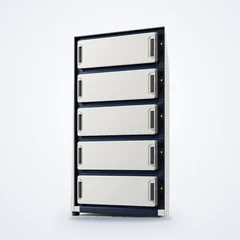
AC-coupled
Solar and battery each have their own inverter and meet on the AC side of the installation.
Typically consideredOften considered when adding storage to an existing solar installation.
Our technology
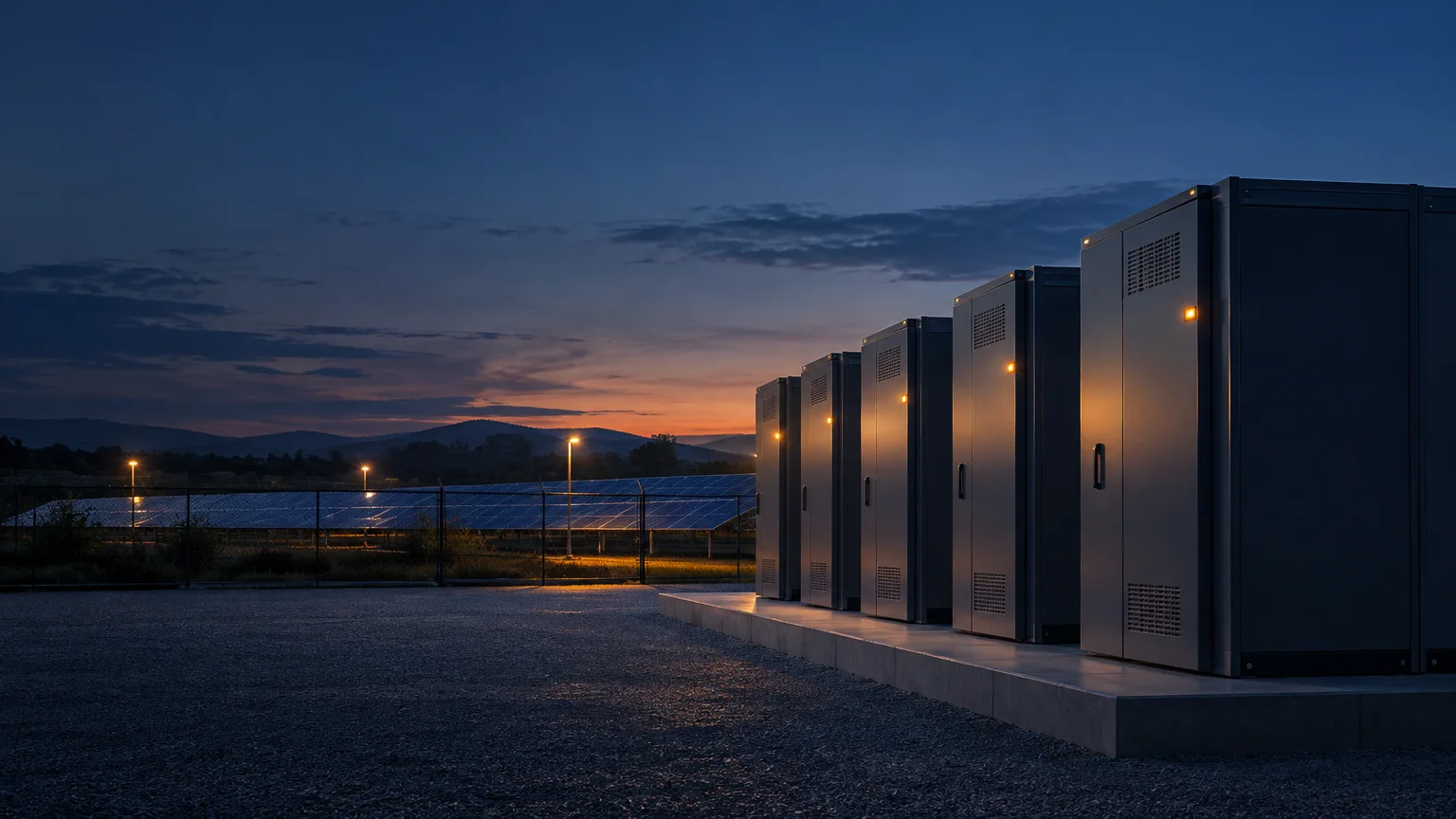
A battery energy storage system is far more than batteries. Explore the layers that work together — and the engineering thinking that connects them.
Concept imagery
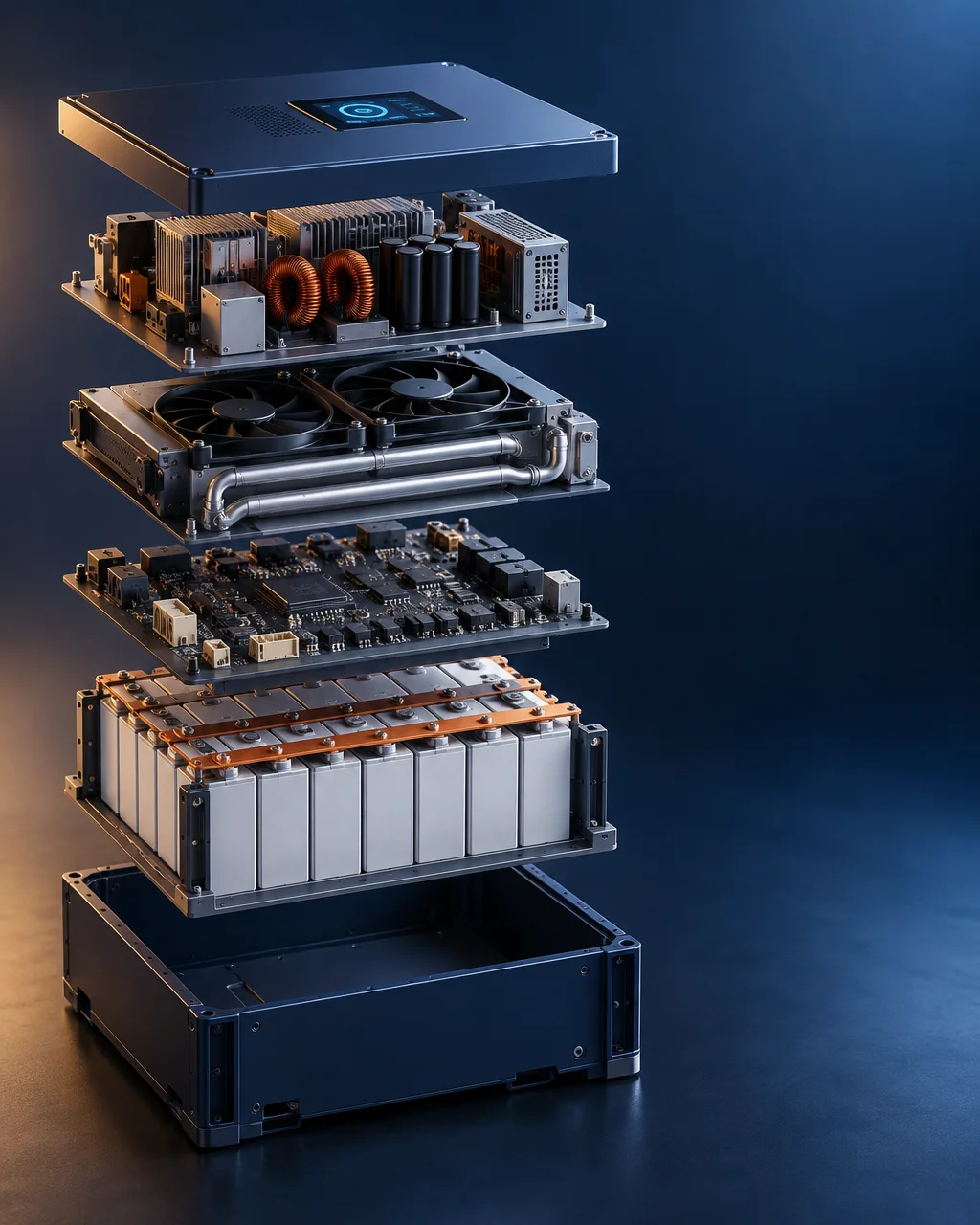
01Anatomy of a storage system
Select a layer to see where it sits and what it does.
01 · Cells
Lithium cells are the foundation of every system. Cell chemistry, format and quality shape what the rest of the system needs to do — so cell selection comes first.
02 · Battery management
A battery management system (BMS) monitors cells and modules, balances them and protects the battery by acting when conditions move outside safe limits.
03 · Thermal management
Batteries prefer a comfortable temperature. Thermal design — airflow, heat paths and, in some systems, active cooling or heating — keeps cells within their intended range.
04 · Enclosure & protection
The enclosure protects the system from its surroundings and the surroundings from the system — with structure, ingress protection, isolation and safe service access.
05 · Power conversion
Batteries store direct current (DC). An inverter or power conversion system (PCS) converts between DC and the alternating current (AC) used by buildings and the grid.
06 · Monitoring & energy management
Monitoring makes the system visible; an energy management system (EMS) decides when to charge and discharge based on the site’s goals, tariffs and conditions.
02Solar + storage integration
There are two common ways to connect storage with solar generation. The right choice depends on the site, the existing equipment and the project goals — and is confirmed per project.
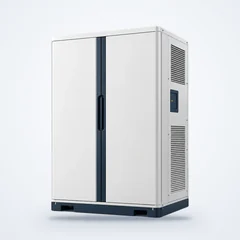
Solar and battery each have their own inverter and meet on the AC side of the installation.
Typically consideredOften considered when adding storage to an existing solar installation.
Solar and battery share the DC side, with one hybrid inverter converting energy for the site.
Typically consideredOften considered for new installations where solar and storage are designed together.
03What storage can do
The same hardware can serve very different purposes. Defining the role is the first step of every project.
Store surplus solar during the day and use it later, instead of exporting it.
Support selected essential loads during grid interruptions, where the system design allows.
Supply energy at times of high demand to help manage peaks in consumption.
Provide stored energy where grid access is limited or unavailable, as part of a complete design.
04Engineering principles
Four principles guide every LIVONUS engineering decision.
Protection, isolation and safe behaviour shape the architecture from the first sketch.
Cells, conversion, controls and the site are designed as one connected system.
Building blocks that can be configured to the site and extended as needs grow.
Installation, operation, service and end-of-life are considered from the start.
05Glossary
Key terms you will meet in any storage conversation.
Let’s take the next step
A battery system. A solar project. A new partnership. Bring your requirements and let the next chapter begin.