Homes with new solar
Plan generation and storage together from day one for a cleaner, simpler installation.
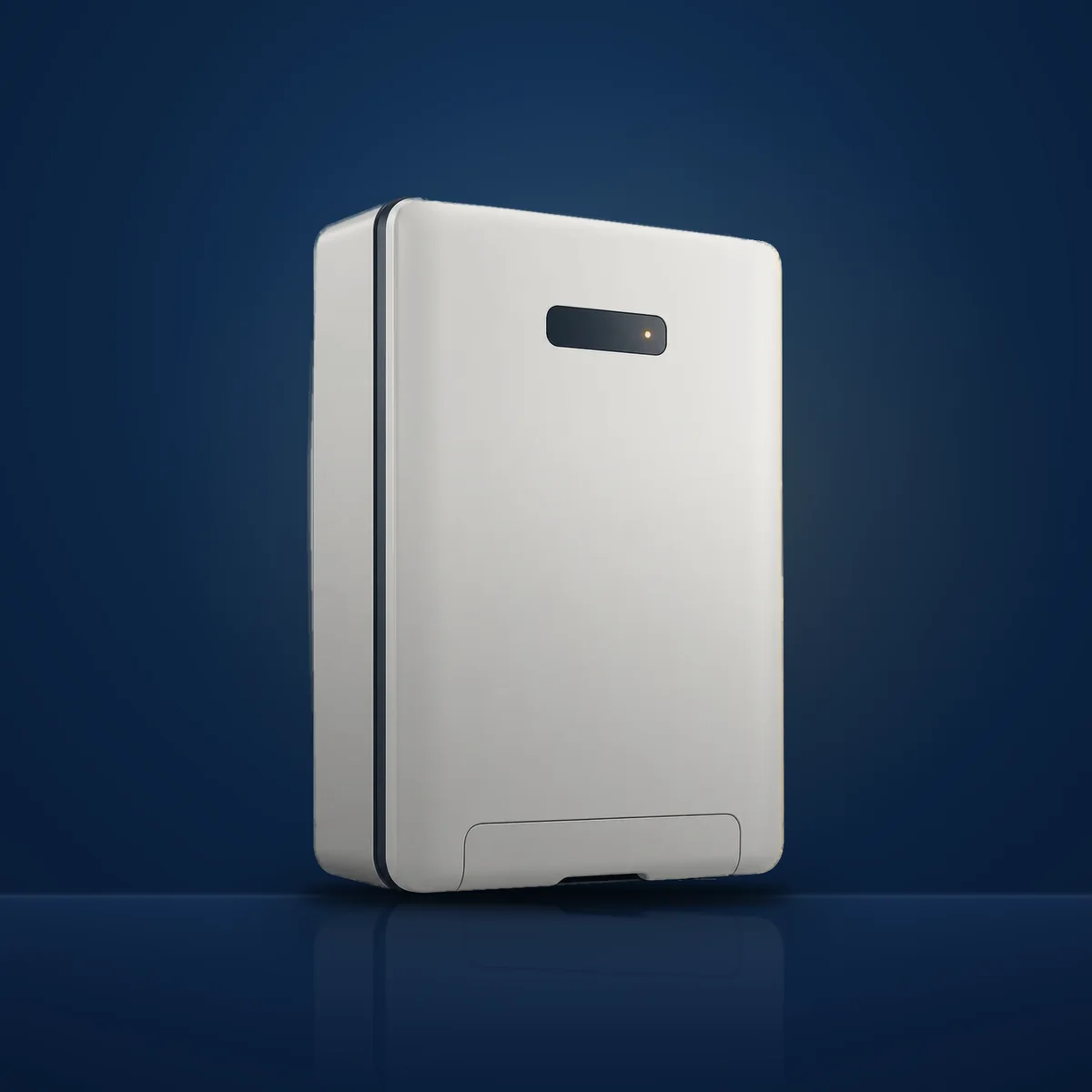
A wall-mounted battery concept for connected residential solar and storage — designed to sit quietly in the home and keep the energy you generate working for you.
01Overview
A home’s energy story is personal: when it generates, when it consumes, and what must keep running when the grid does not. The residential concept starts from that story rather than from a catalogue.
Its slim, wall-mounted enclosure is planned to fit garages, utility rooms and sheltered walls, and to work alongside new or existing rooftop solar as one connected system.
02Design principles
A calm, compact enclosure intended to sit discreetly in living and utility spaces.
Storage is planned together with the home’s generation so surplus solar is put to work.
Which circuits matter most during an outage is defined during planning, not after.
Future additions — an EV, a heat pump, more panels — are part of the first conversation.
03Where it fits
Plan generation and storage together from day one for a cleaner, simpler installation.
Add storage to an existing installation once inverter compatibility has been confirmed.
Keep selected essential loads supported when the grid is unavailable, where the system design allows.
04How it connects
Solar generation, the inverter, the battery and the home’s circuits are planned as one system. The battery stores surplus daytime energy and supplies the home when the sun goes down.
05Prepare your brief
A few details help shape the right residential configuration.
06Questions
Often, yes — but compatibility depends on your inverter, system voltage and connection method. Include your existing equipment details in the brief so compatibility can be confirmed first.
Backup capability depends on the overall system design, the inverter and how essential circuits are arranged. These are defined during planning for your home.
The concept is planned for indoor or sheltered wall installation such as garages and utility rooms. The final location is confirmed against the product documentation and local requirements.
07Explore other systems
Let’s take the next step
Share your home’s energy needs and existing equipment, and start a structured project brief in a few minutes.